- Mar 22 Wed 2017 16:31
-
2 Weeks Slim Waist Transformation: How to get a flat stomach fast

- Mar 16 Thu 2017 21:36
-
Octopus slices with sesame dipping sauce Muneo-sukhoe 문어숙회
https://www.maangchi.com/recipe/muneo-sukhoe
Octopus slices with sesame dipping sauce
Muneo-sukhoe 문어숙회
Today I’m going to show you a great way to eat cooked octopus: as tenderly cooked slices served with a nutty sesame dipping sauce. This is the traditional Korean style to eat octopus, called Muneo-sukhoe (문어숙회).
When I lived in Korea, I ate octopus this way all the time. I remember one time my whole family went to visit my father’s hometown, which was on the seaside. My mom woke up early in the morning and went to the dock and waited for a fisherman to bring in fresh octopus. She came home with a large bucket filled with live octopi. All our family and some neighbors and my father’s friends came over and we had a delicious breakfast all together. My father passed away a long time ago but it always remains in my heart as a good memory.
Some people like to dip octopus in chogochujang (초고추장), the sweet, spicy, and sour dipping sauce that Koreans usually make for raw seafood, called hoe (회) in Korean, but more people prefer the sesame oil based sauce in this recipe. I think the combination of octopus with this sauce is heavenly, and really allows the octopus taste to come through. You can try both and see which one you like!
Most octopus in North America are sold frozen and already cleaned. They’ll work well in this recipe, too. Wash the octopus and rub it with salt, remove all slippery stuff and cook it. And as I mention in the video, be sure to save the water from boiling the octopus, you can use it to make beef and radish soup (soegogi-muguk 쇠고기무국). Just substitute the water in the recipe with the water you used to boil the octopus in, and the resulting soegogi-muguk will be even more flavorful and delicious!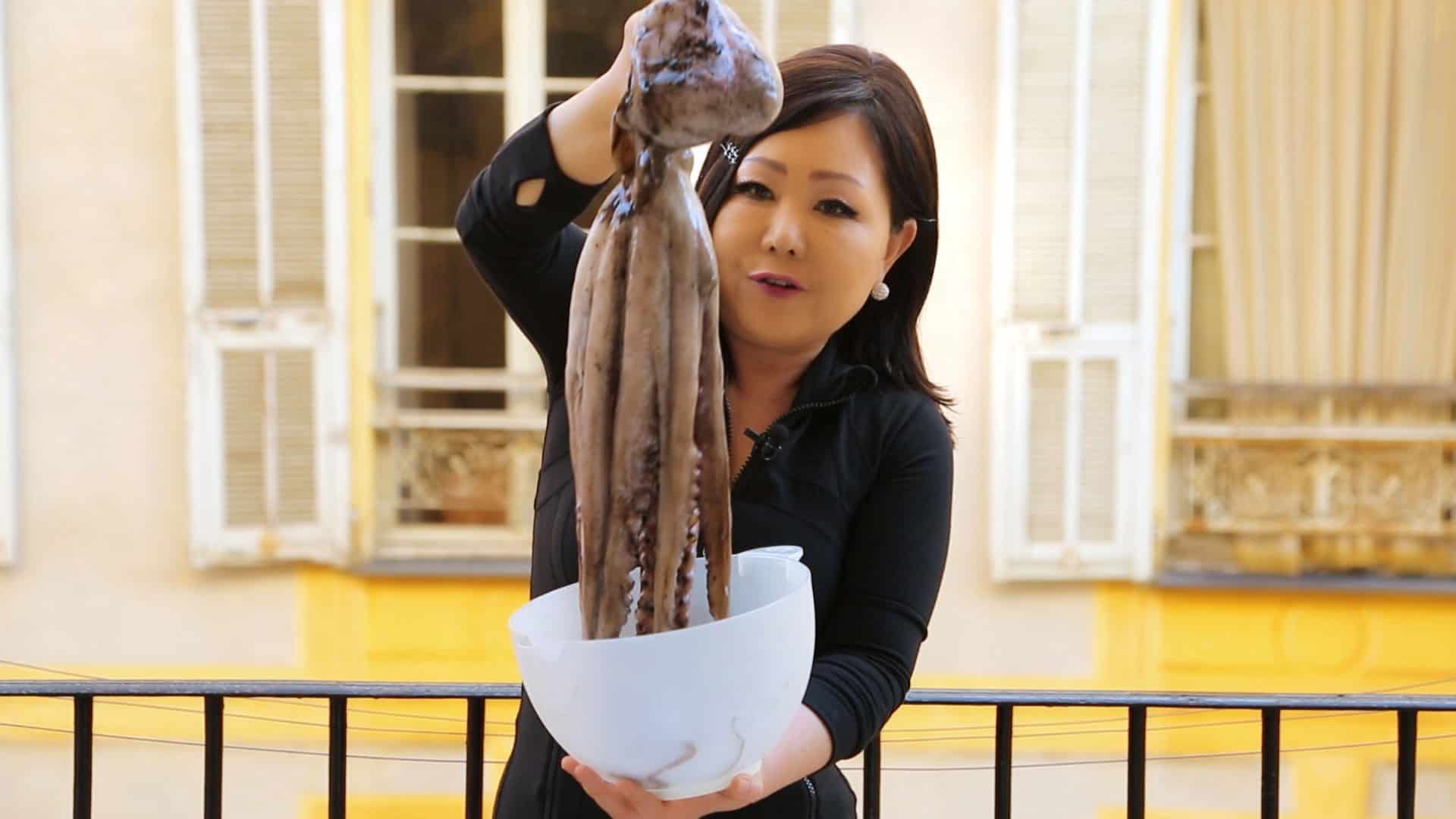
I filmed this video in Nice, France, where I discovered they have an abundance of fresh and delicious octopus. I was there for one week and bought 2 large octopi in that time. I ate a lot of octopus until I almost get tired of it! I have another video and recipe coming using octopus from Nice, and I have many more Korean recipes that use octopus. I’ll post more of them the next time I have access to delicious octopus like I found there.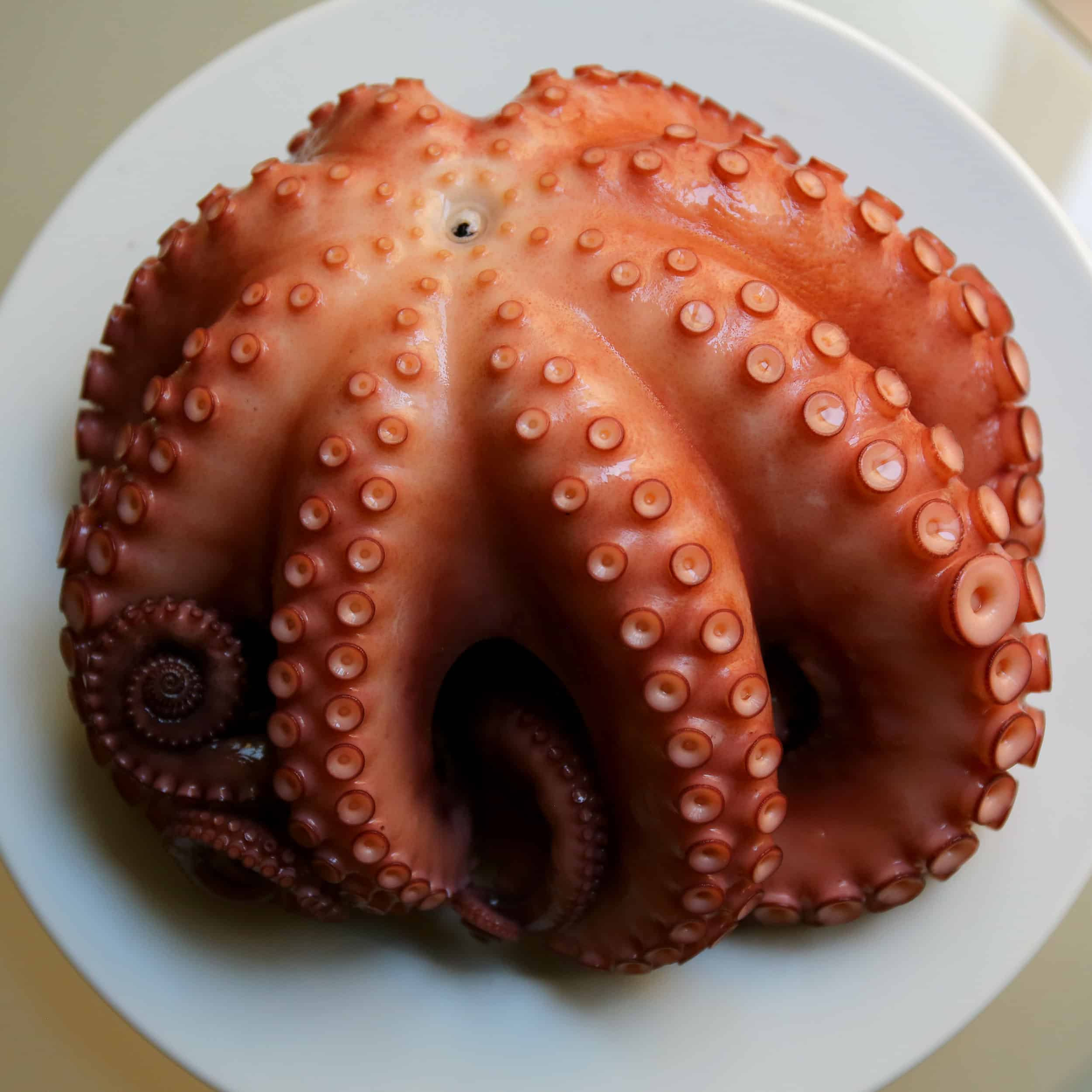
Prepare octopus
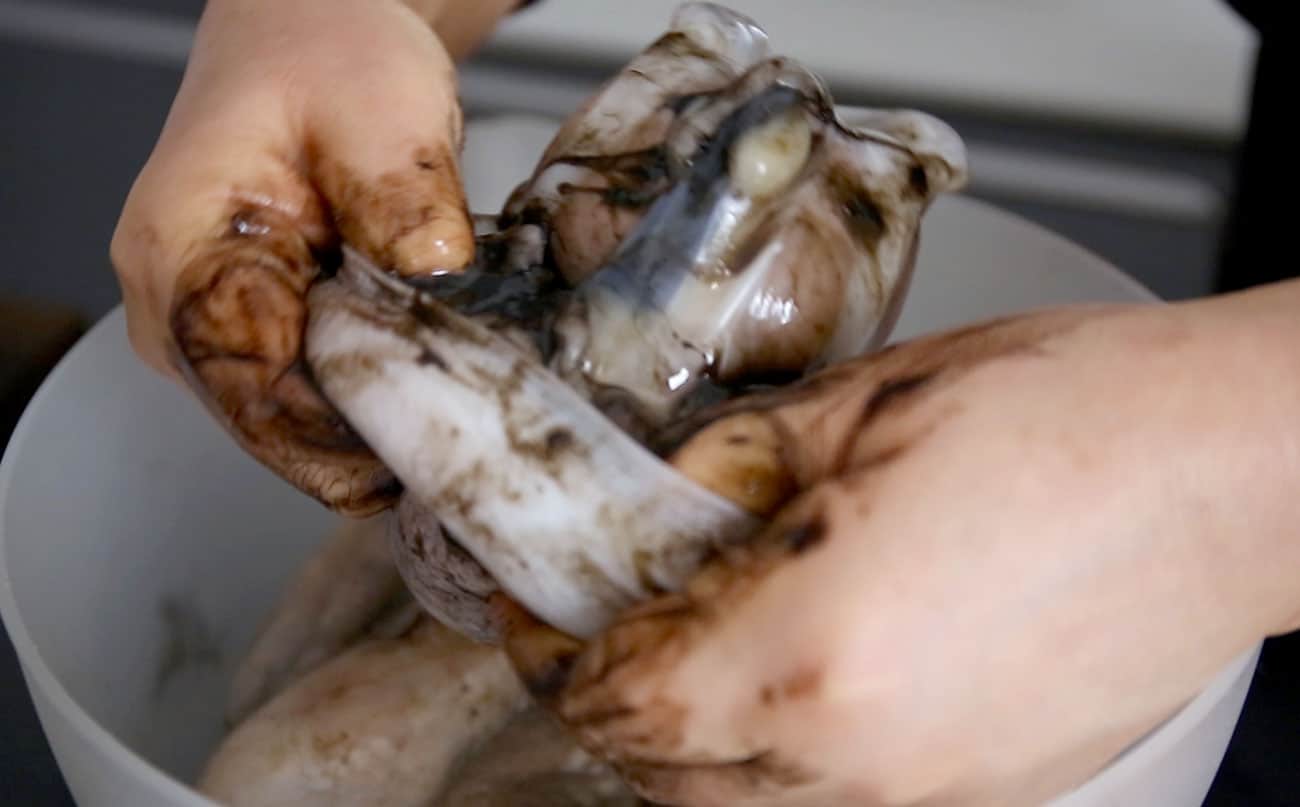
- If the octopus hasn’t been cleaned, you’ll first need to clean it. Put the octopus in a bowl big enough to hold it. Gently flip the head inside out.

- Remove anything attached to the inside of the head, including the ink sac, until it’s nice and smooth. You can use your fingers or scissors. There’s a film on the inside of the head, remove that, too. During this process, some ink might escape from the sac and it might get black. Don’t panic! Keep it all in the bowl.

- When it’s all clean and smooth, flip the head outside in.
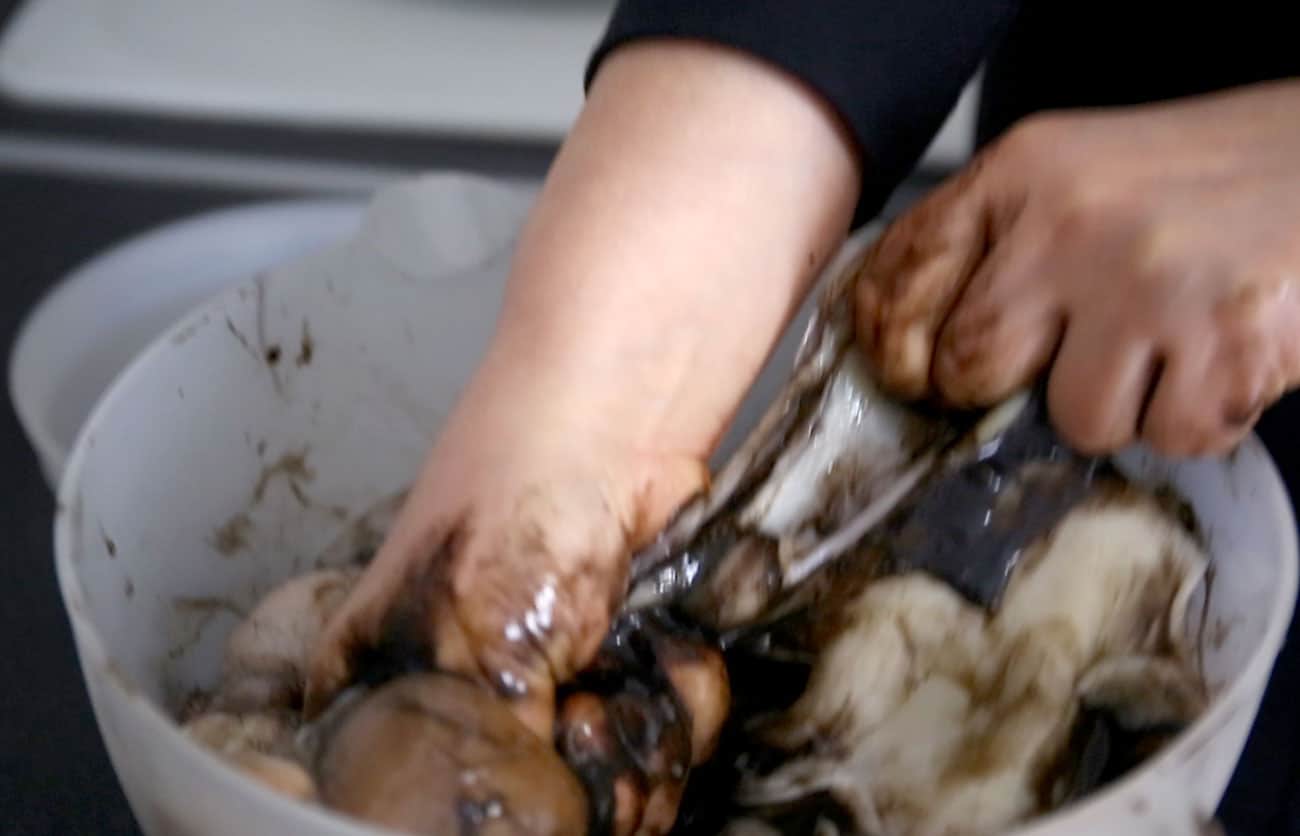
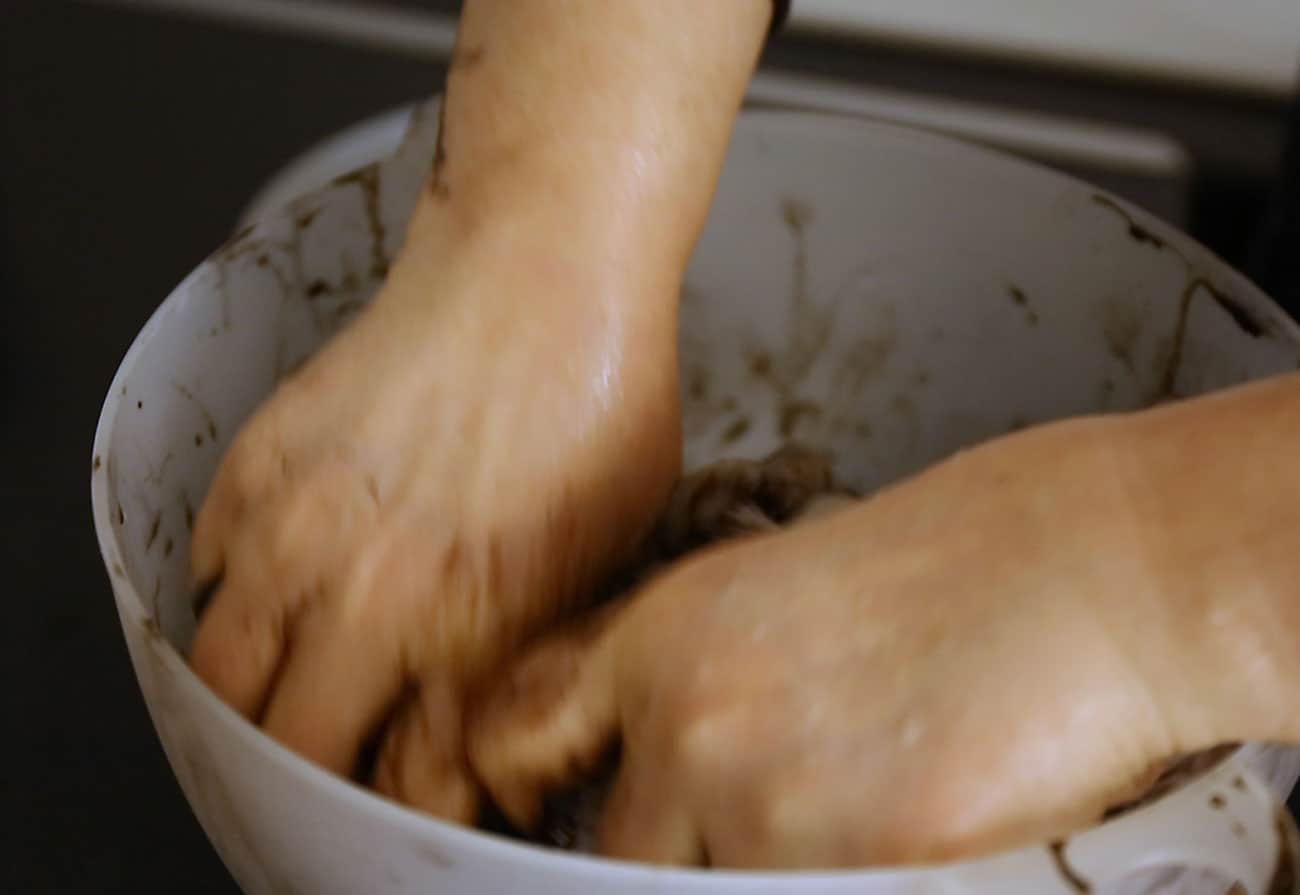
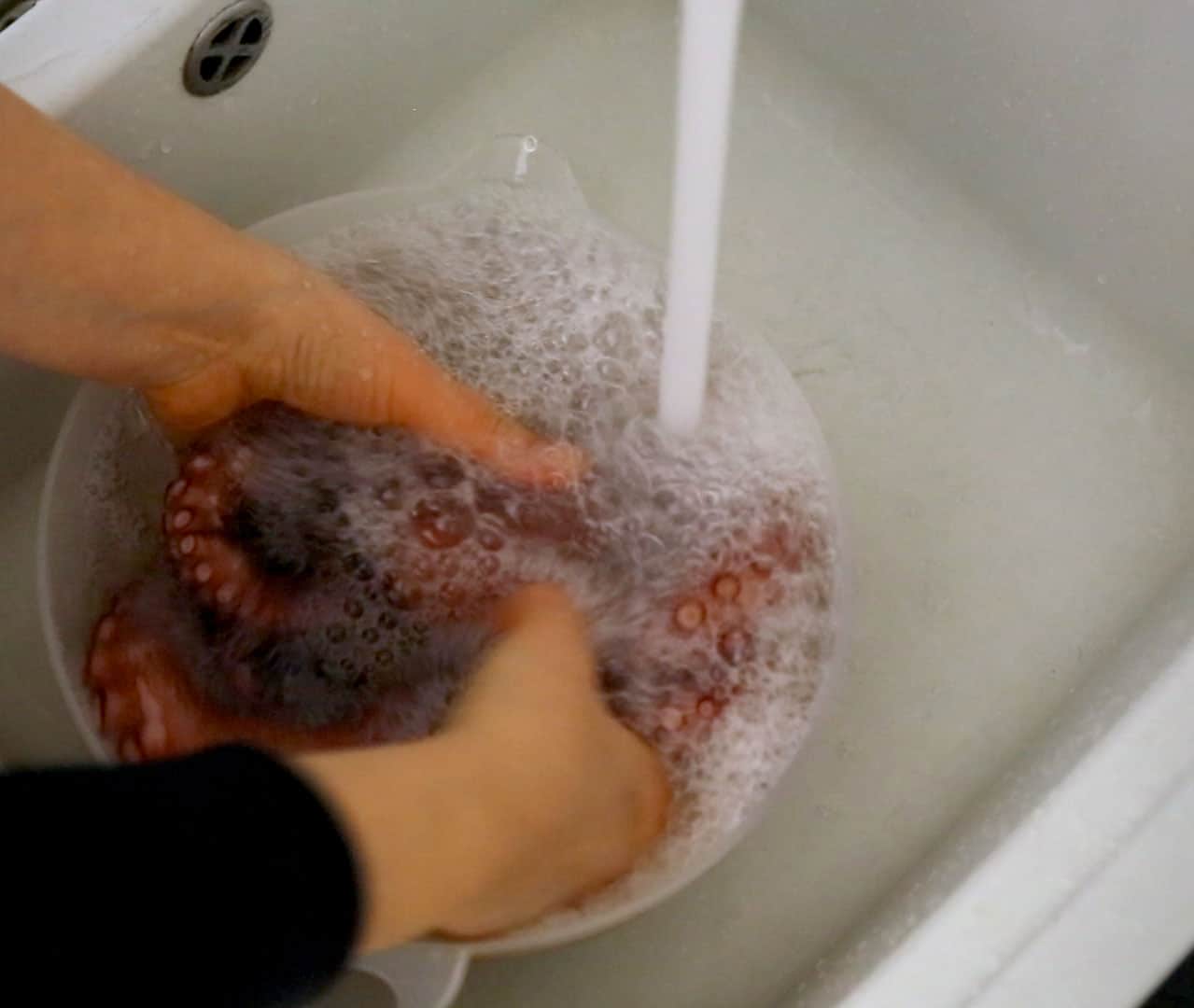
- Sprinkle salt (sea salt or table salt) generously over the octopus. Then rub and scrub harshly, like you’re cleaning laundry. Keep it up for a few minutes, and it will foam up.


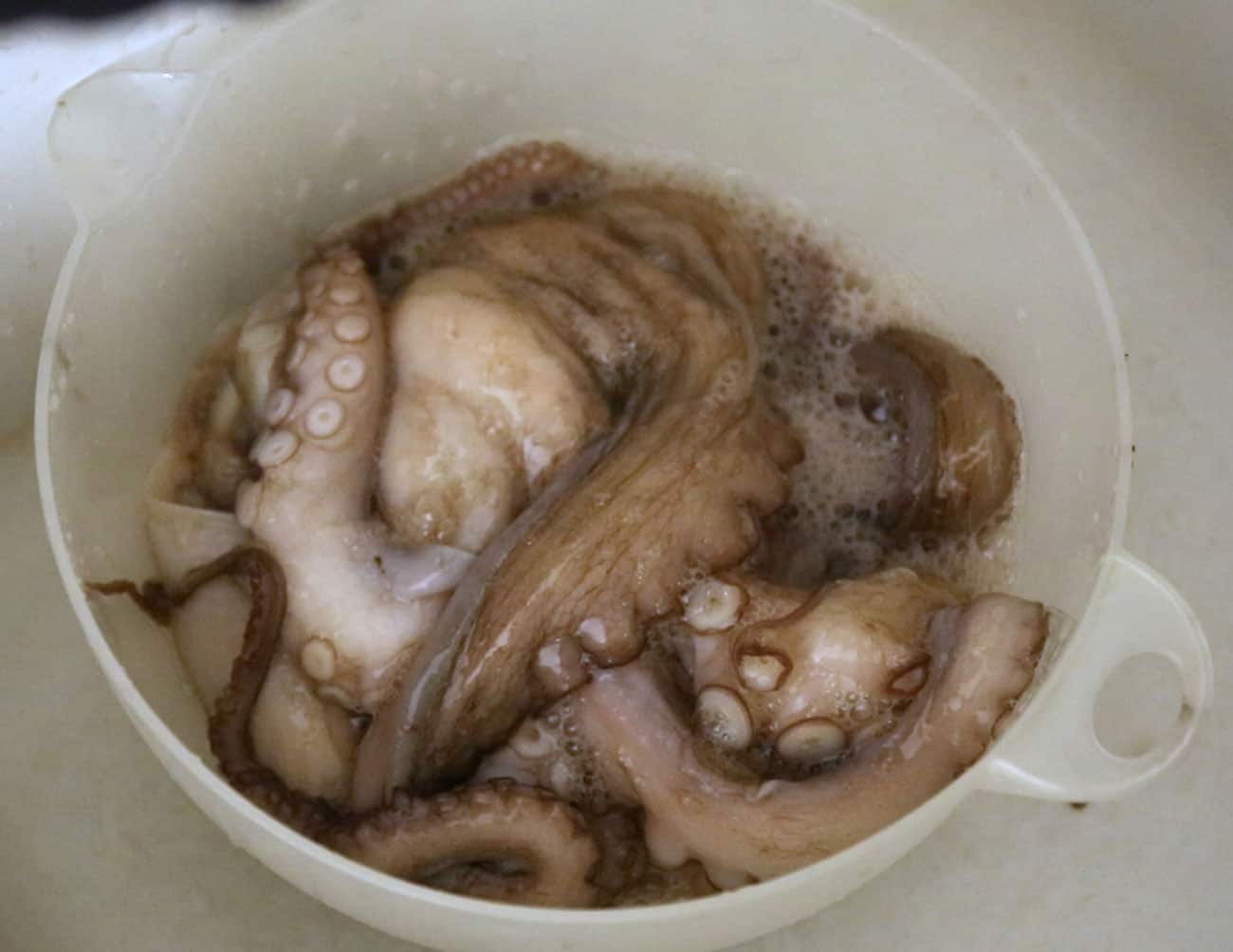
- Rinse the octopus in cold water a couple of times. If it’s still slippery or dirty, rub with salt and scrub again until it’s clean. This process will not only clean the suckers but also tenderize it.
- Strain the octopus.
Boil octopus
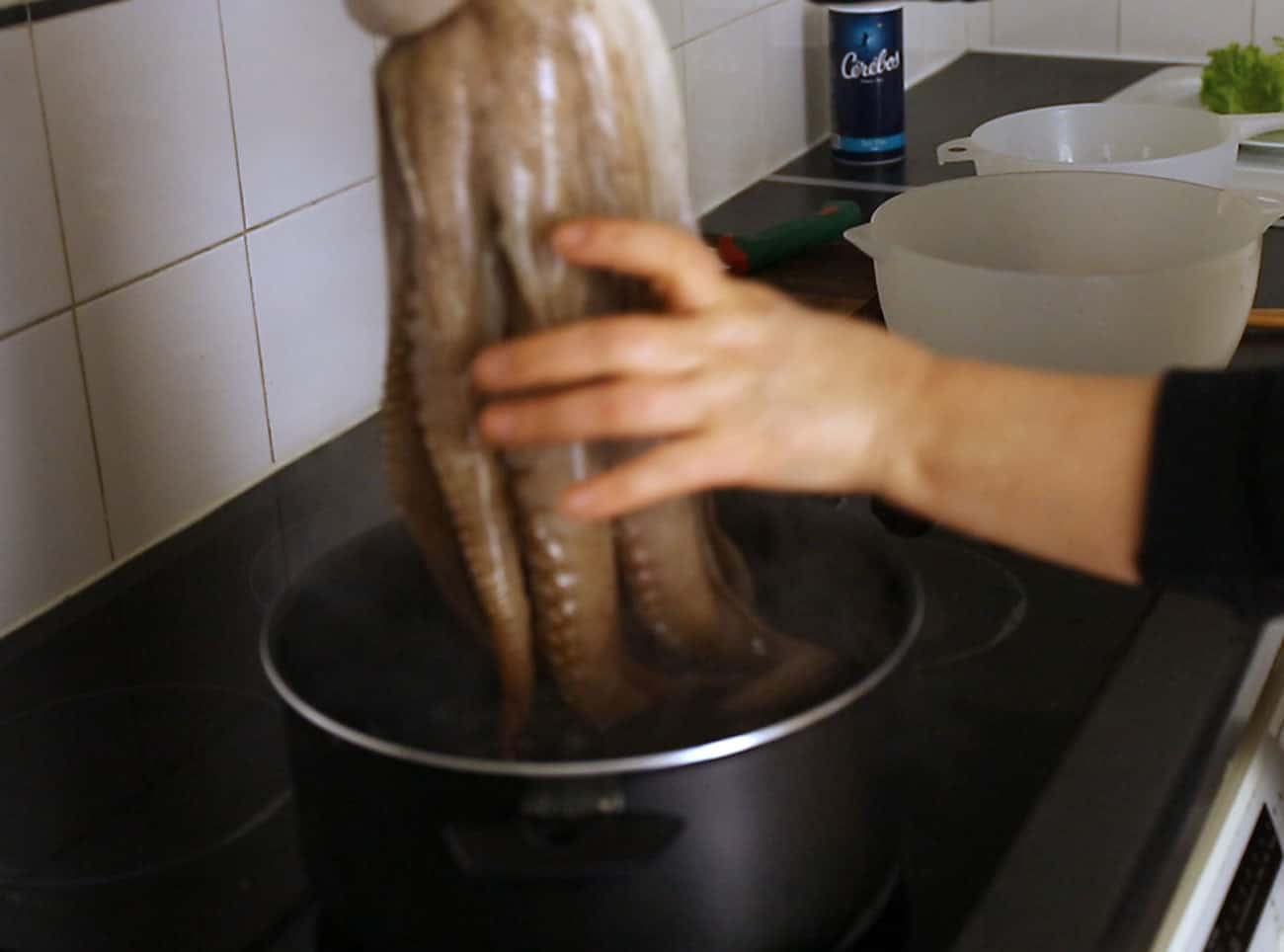
- Bring a large pot of water to a boil.
- Add the octopus tentacles first. Press it down with a wooden spoon to completely submerge it.


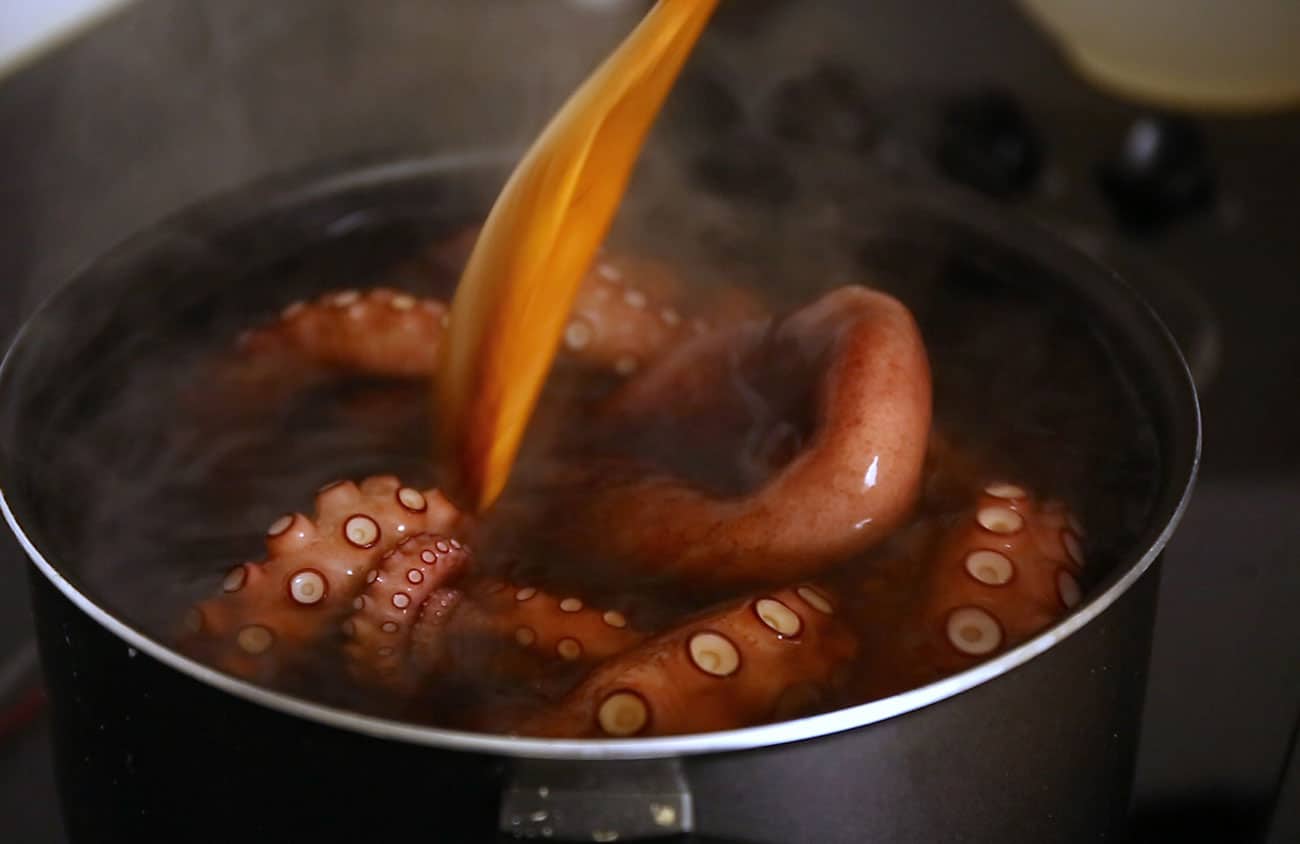
- Turn it over a few minutes later and bring the head to the bottom. The octopus should have changed color to red.

- Turn it over every a few minutes to cook evenly.

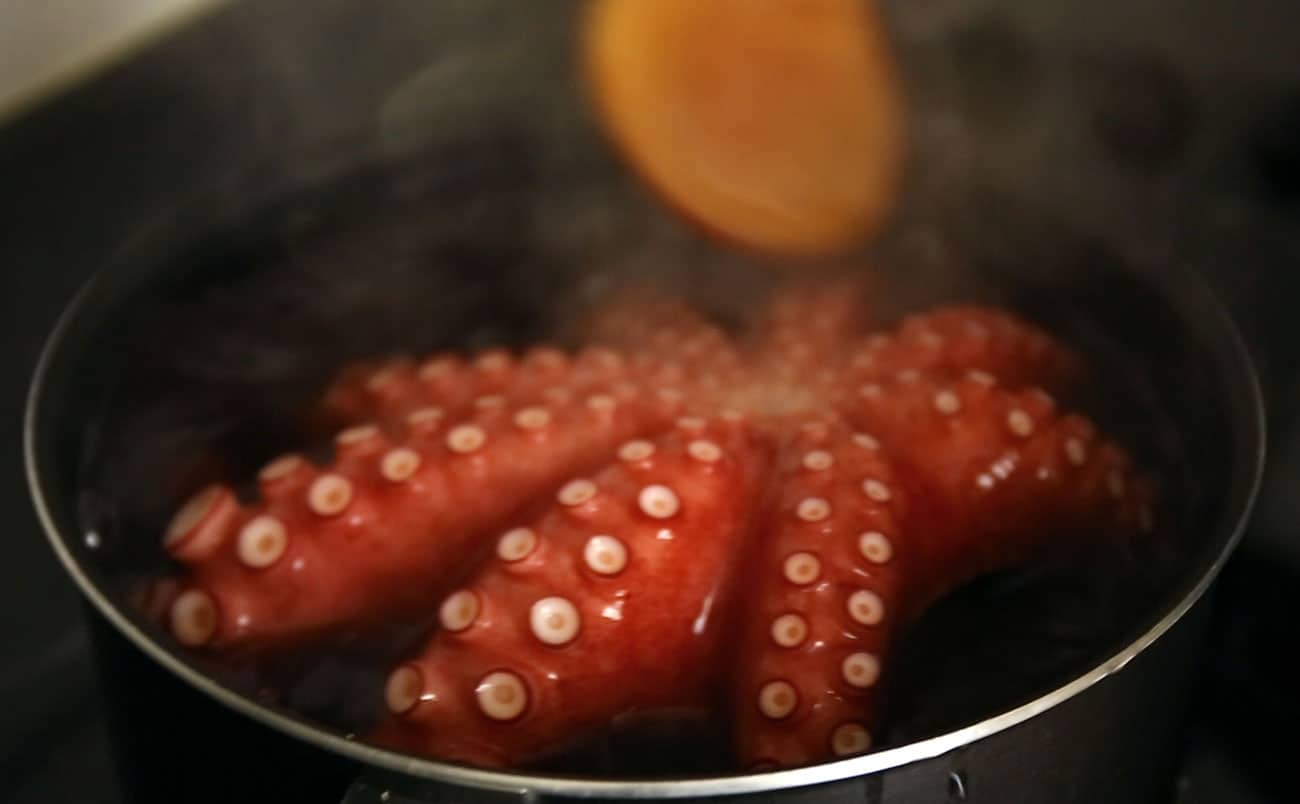
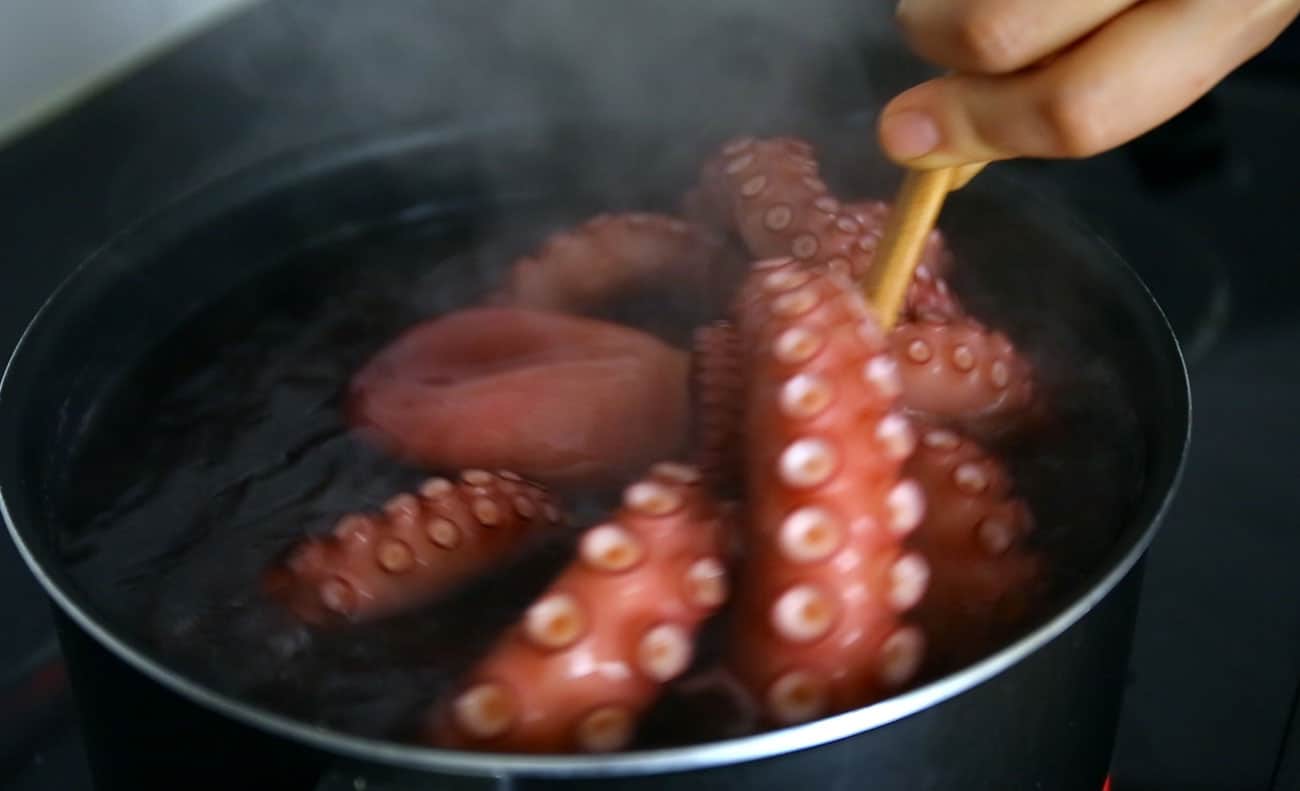
Cooking times
2 pounds (about 1 kg) octopus – 7 to 8 minutes
2 to 4 pounds (about 1 to 2 kg) octopus – 8 to 10 minutes
4 to 6 pounds (about 2 kg – 3 kg) octopus – 13 to 15 minutes
More than 6 pounds (more than 2.7 kg) octopus – 17 minutes
If it’s cooked too long, the octopus will be rubbery, and if it’s not cooked enough, it’ll be a little translucent. The flesh should be nice and soft and white. You can test if it’s done or not by poking the thickest tentacle with a chopstick. It should go through easily.
Make dipping sauce
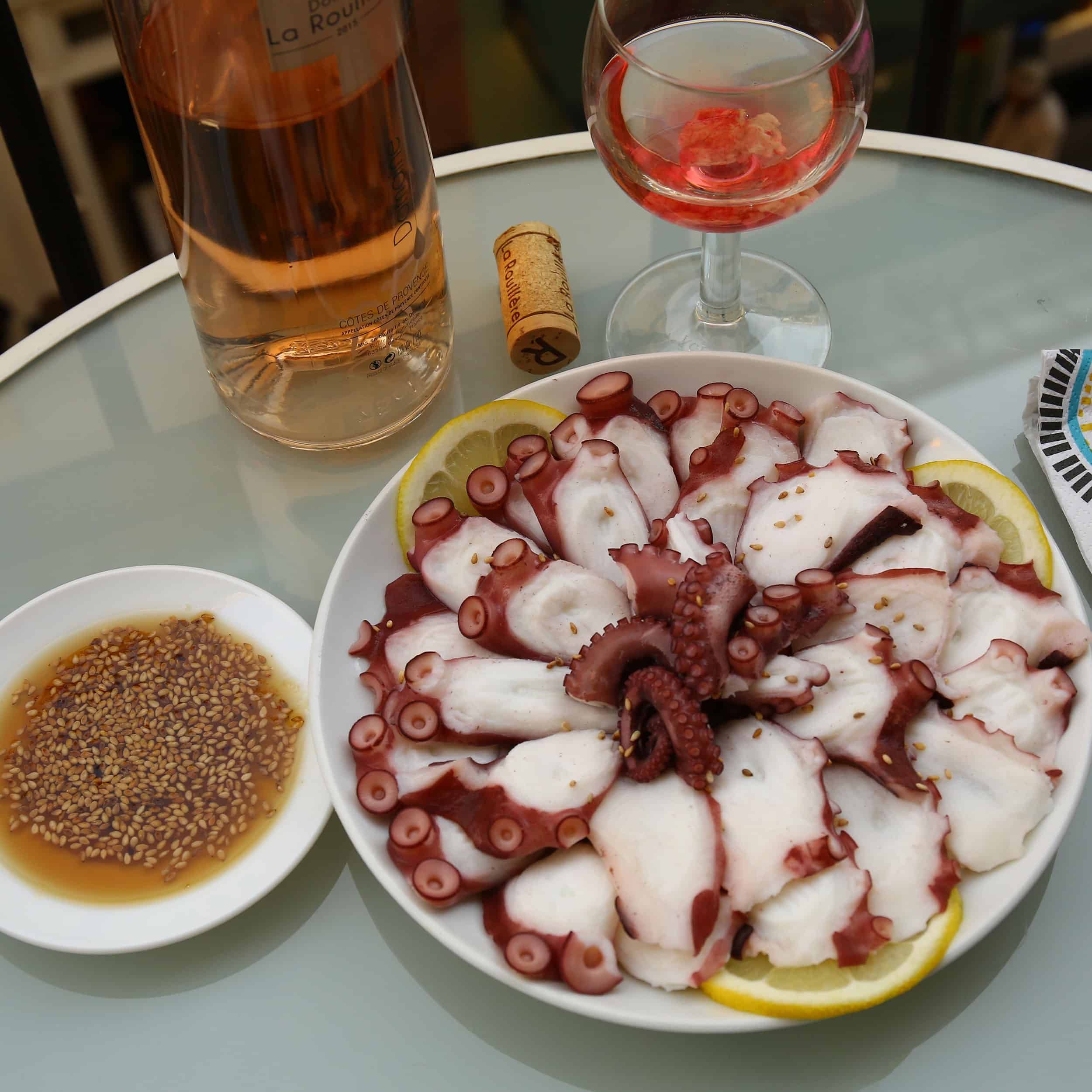
- Mix ¼ teaspoon salt with 2 to 3 tablespoons sesame oil in a small, shallow bowl.
- Add 1 tablespoon sesame seeds.

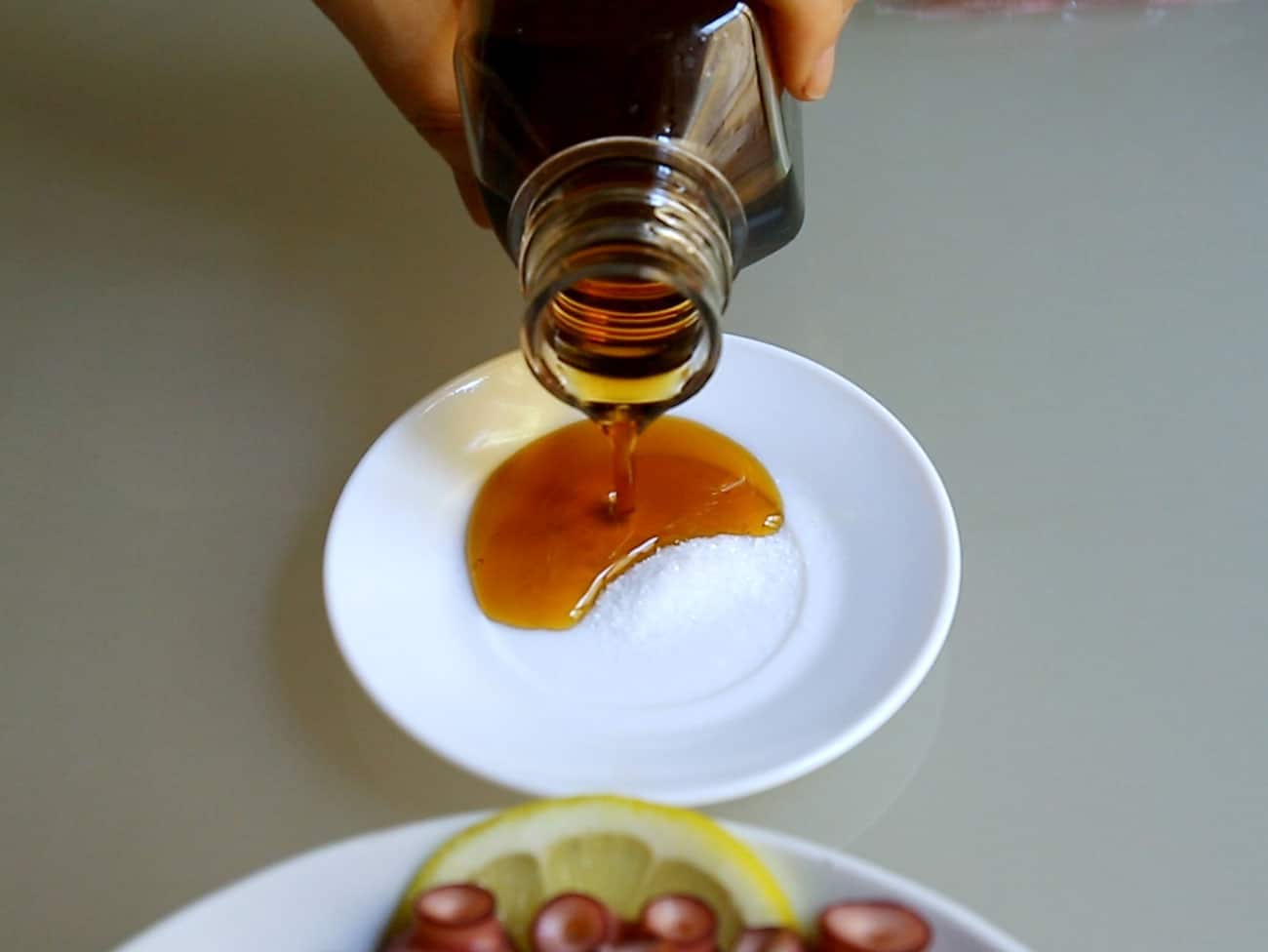
Slice octopus & serve
- Take the octopus out of the boiling water. Quickly rinse it in cold water to stop it cooking and to keep the skin smooth and beautiful.

- Strain and let it cool down.
- Cut off the head.
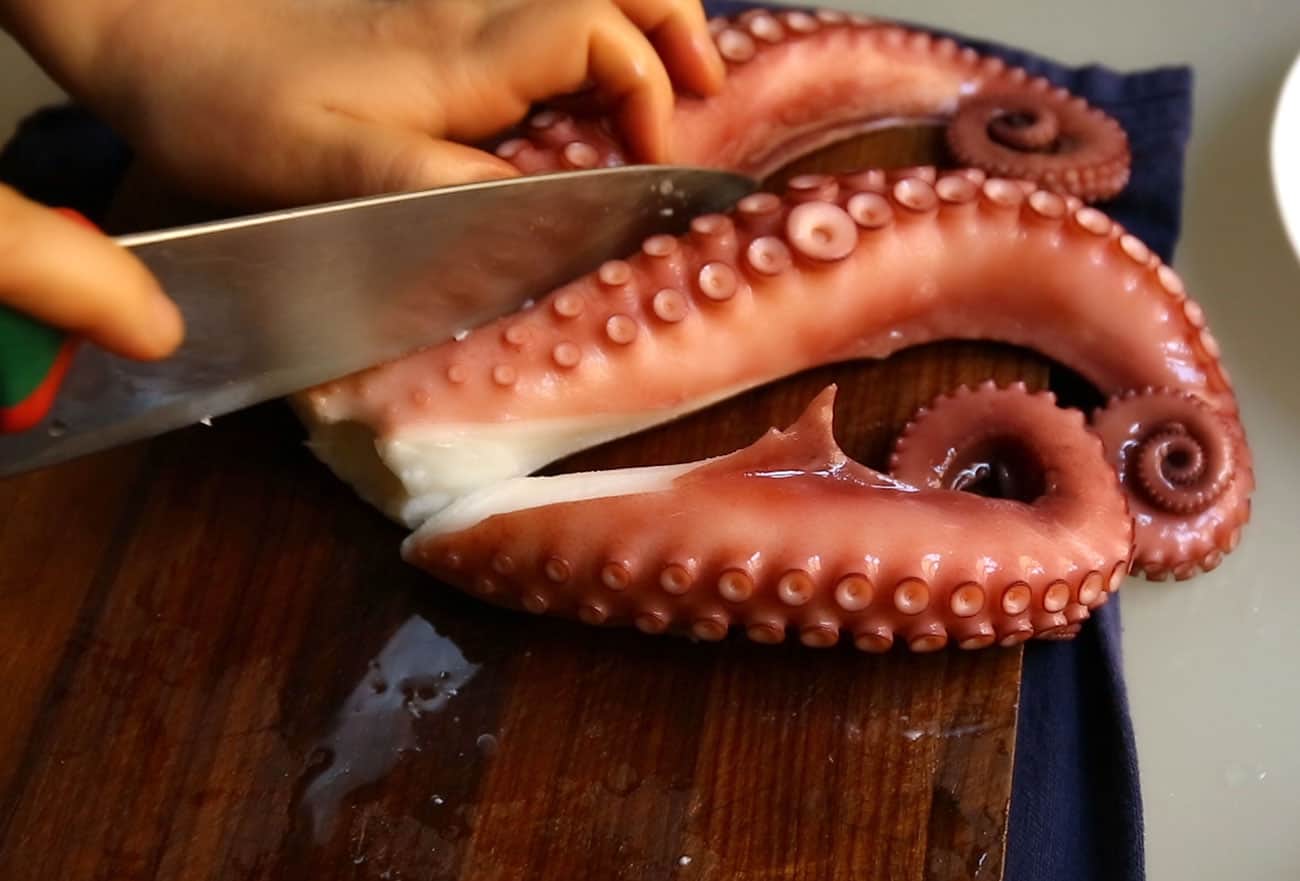
- Split the cluster of tentacles in half. In the middle of both halves will be the mouth and beak. Remove these and discard.


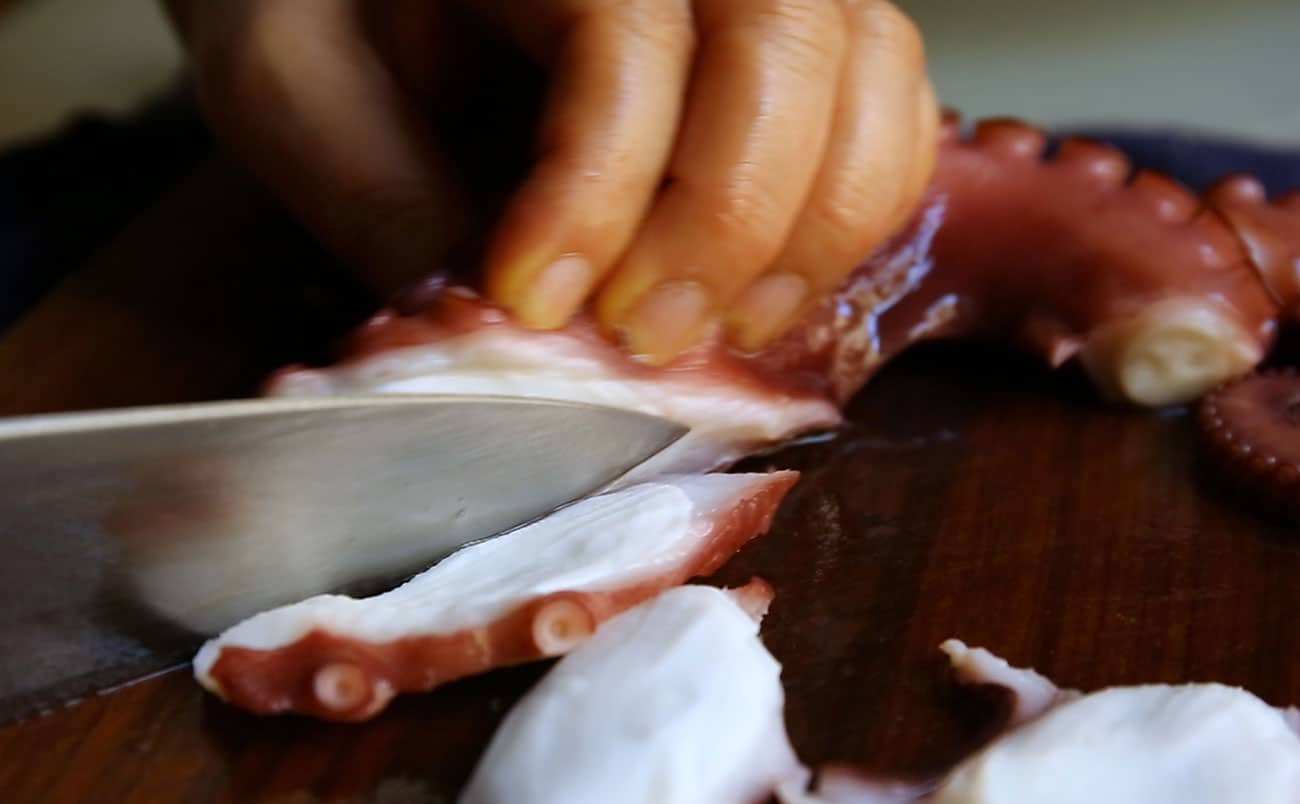
- Split each tentacle from its cluster. Cut the tentacles into thin slices and serve on a platter with the dipping sauce.

How to keep the leftovers
- Keep leftovers in the fridge for a week or freeze them for up to 1 month.
- To freeze, divide the octopus into whatever portions you want, then wrap each portion in plastic and freeze. When you want to eat some, take out a portion and let it thaw out a bit, which will make it easier to slice. Then serve with the dipping sauce.
ADVERTISEMENT
6 Comments:
- Mar 16 Thu 2017 18:42
-
自製罐頭醉鮑魚
自製罐頭醉鮑魚
在街市常見鮮活的鮑魚,價錢不貴。
來自大連,及南中國海的鮑魚,是軟滑又屬可持續的海鮮;來自南非及澳洲鮑經已開始被列入紅色警告品種,這些鮑魚又比較韌,不吃也好。
一般人清蒸,其實不是最理想的烹調方法,用低溫處理,軟滑鮮嫩。這簡單的做法,還可方便保存一星期,越浸越入味。
現今很多廚師有用slow cook 低溫機,但其實無須機器也很容易做到。我見過傳統意大利慢煮八爪魚烹調法,是用很大很大的一鍋熱湯,放入八爪魚滾起後關火,浸一個晚上,便成嫩滑的八爪魚切身。慢煮的原理是衡溫,一大鍋水可以保持溫度一段相當長的時間,所以無須買昂貴的低溫機也可以做到。
你只須要一個溫度計,便可以做。 一般小小的活鮑魚,用75度左右浸煮8分鐘便可以,然後入耐熱樽燉30 分鐘燉抽真空,便有罐頭鮑魚。

材料:
大連鮑1 斤,約十隻
紹興酒100 毫升
浸煮湯底:
水1 公升
糟鹵汁水400毫升
冰糖10 克
粗鹽2 茶匙
魚露1 糖匙
薑2 片
1.清水 1 公升 燒至75度,加入鮑魚, 不要再滾起。
2.把火調至最低,加蓋煮八分鐘。
3.取出,去殼去腸臟洗淨。
4.糟鹵汁材料煮至冰糖溶透,加 紹興酒攪勻取出。
5.加入鮑魚放入樽內。
6.隔水燉煮30分鐘,關火待涼。
- Mar 11 Sat 2017 15:55
-
鮮奶饅頭

- Mar 11 Sat 2017 15:51
-
南瓜饅頭


- Mar 11 Sat 2017 15:32
-
蝦米腸-簡單又易做

- Mar 10 Fri 2017 15:16
-
飲食籽】驚蟄來了! 鼻敏感飲辛夷花煲蛋 驅風寒、通鼻竅之效,亦可滋陰潤燥、健脾養血。
http://hk.apple.nextmedia.com/supplement/food/art/20170305/19946539
【飲食籽:廿四節氣】
 辛夷花雞蛋食療(3-4人份量)
辛夷花雞蛋食療有驅風寒、通鼻竅之效,亦可滋陰潤燥、健脾養血。
在中醫診所執藥近廿年的周寶珍(徐太),有豐富中藥知識和經驗,老公及兒子都是中醫師,煲藥材湯水及食療當然難不到她。今次她將教大家煲驚蟄的節令湯水,睇節氣養生。
- Mar 10 Fri 2017 12:33
-
菜茶- 汕尾人的傳統美食,脆、爽、鹹、甜、甘、香共冶一爐,口感澎湃,用料十足。
http://hk.apple.nextmedia.com/supplement/food/art/20160516/19610781
【飲食籽:故味重嚐】
獨在異鄉為異客,每逢佳節倍思親。王維的詩,說穿了天下異客的心,只盼一道家鄉美食,能鎮住相思之痛。把青菜魷魚乾蝦米冬菇等材料,澆一勺熱湯,加幾丁花生脆米,便成了海陸豐人的傳統美食菜茶。每逢農曆新年或結婚添丁等喜慶事時,汕尾人會聚首做菜茶,用一根筷子進食。近年,這家鄉味道也飄來我城。幾口湯,簡單幾道菜,平實不過,帶着源自故鄉的餘溫,對異鄉過客尤其珍貴。
「傳統汕尾人,只會用一隻筷子嚟食菜茶咋。」來自汕尾的八十後林悅帆(Ryan)說。他隨即端起那碗剛弄好、熱呼呼的菜茶,用筷子拌了幾圈,便往嘴裏送。咕嚕咕嚕,再扒幾口菜,不消一會碗已是空空的。「我嚟咗香港十幾年,遇到好多同鄉,個個都話好掛住鄉下啲美食。」思鄉病病入膏肓的,又豈只同鄉,Ryan當然有份。年多前,他索性在太子開一間專賣潮汕美食的小店「粿然好味」,將故鄉小食發揚光大。淋上惹味冬菇蠟腸蒜油的鹹味千層糕、加了蝦米魷魚雜菜炒得香噴噴的潮炒米粉、還有一口一顆的的骰骰的薯粉餃子,全部看似簡單,其實做法極繁複,統統也是心機之作。「尤其係菜茶,咪以為將十幾樣配料撈埋就得,全部要分開炒,好花時間!」


走進他的廚房,看到大大小小的筲箕,裝滿切好了的菜葉菜莖,分門別類一個叠一個。既然全是菜,何不一鑊熟?他笑着回答:「每款菜炒熟嘅時間都唔同,就算菜心,葉同莖都有分別。」連洗和切的準備工夫也大有技巧,菜要逐一洗乾淨,娃娃菜、椰菜、菜心葉、白菜葉等切成絲,莖類則切成段,如大蒜、芹菜、荷蘭豆等,否則太幼身,煮熟後會變腍,口感盡失。而帶嚼頭的麥豆和白眉豆,要先煮20分鐘至腍身才能用。一切準備就緒,率先下鑊的當然是較硬身的莖類,兜幾圈,待差不多熟透時才加進菜葉和浸好的粉絲,再翻幾下。「將炒好嘅菜鋪在碗底,就可以淋湯。」菜茶菜茶,明明是茶,何解是湯不是茶?「以前係用茶,但日子耐咗,個個嫌擂茶葉麻煩轉晒用湯喇。」Ryan的姑姐說道。這口熱湯殊不簡單,每朝用豬骨、雞殼和胡椒粒熬最少兩小時才成,肉的精華盡滲湯中,既有菜的清香,也有陣陣回甘甜味。「其實菜茶最好食嘅,係面層啲脆米、花生同蝦米。」姑姐笑說。她並非誇口,這三款材料連同冬菇、菜甫、臘腸等,全部由她老家汕尾直送過來,她說這才能做出汕尾風味。尤其蝦米,必定要選當地出產、跟手指差不多長的蝦米,送到店後逐隻剪去頭、尾和刺,再炒香。脆米做法也講究,非用油爆,而是用海邊浸過鹹水的沙粒,鋪滿一個鑊,爆出來的米花才夠鹹香,「喺香港邊做到,一定要用家鄉貨先正宗。」


跟着汕尾人用一支筷子吃菜茶,果真風味猶存,脆、爽、鹹、甜、甘、香共冶一爐,口感澎湃又豐富,且用料十足,扒了幾口已幾乎半飽。「講起菜茶,我太嫲嗰代就有,一直流傳至今。但唔係成日有得食,大時大節先做一次。
- Mar 10 Fri 2017 01:49
-
鶴佬菜茶-http://www.mingpaoweekly.com/9308-鶴佬菜茶


- Mar 09 Thu 2017 16:16
-
清湯雜錦紹菜煲 $168 又稱為雜燴爐,類似盆菜,將所有食材放在煲內,層層叠上。

潮州墳前食螄蚶 撒殼發財
潮汕有「冬節小過年」的俗語,冬至必定祭祖謝神,所以食物亦與拜神有關。無論酒宴或祭奠,潮州人傳統會備有滷水鵝,而且要保持鵝身完整。拜祭完了,便先吃掉鵝肝等內臟,然後才到掌翼及鵝胸。「每逢冬至,我們一早便要準備東西。媽媽會預先到九龍城的潮州館,外賣原隻滷水鵝,拜完神後,滷得最入味的鵝頭通常會孝敬家裏的老人。節日過後,吃剩的頭頭尾尾,便和春菜一起煮,可以食差不多一星期,節儉得很。」潮味居老闆宋炎坤說。他出生於傳統的潮州家庭,父母均為潮州普寧人。
除了滷水鵝外,潮州人還會食螄蚶過冬,由於螄蚶的外形像金錢,乃好意頭。舊時當地人會在冬至掃墓,子孫在墳墓上吃螄蚶,然後把殼撒在先祖墓塚之上,祝願家人行運發財。潮州人的螄蚶是生吃的,由於要徹底清洗外殼,加上供應有限,所以在餐廳並不常見。宋炎坤用醃漬方法,以蒜頭、魚露、白酒、玫瑰露及礦泉水醃上半天,可保存一個星期。打開殼後,還是鮮血淋漓,肉質極嫩,可直接或佐糜吃。
當地人還流行打邊爐,衍生出雜燴爐的出現,概念類似我們的盆菜,通常以紹菜墊底,放有雞肉、魚肚及海鮮,在鍋內一層一層地叠上,淋上大地魚上湯,用料名貴,是昔時大戶人家的冬至美食。
- Mar 09 Thu 2017 15:35
-
GAME OF DEATH: BRUCE LEE’S UNFINISHED BUSINESS FIGHTLAND BLOG

http://fightland.vice.com/blog/game-of-death-bruce-lees-unfinished-business
GAME OF DEATH: BRUCE LEE’S UNFINISHED BUSINESS
FIGHTLAND BLOG
By Sascha Matuszak

Hi Maangchi, this octopus is very good looking.
I write to you from Galicia (Spain) where the octopus is eaten a lot and I tell you how we do it for you to try it:
You cut the octopus as you know how to do it, sliced in wheel on the plate
You pour coarse salt
You pour olive oil
And at the end spicy hot paprika.
I hope you like it a lot
Demetrio
Thank you for bringing me back to my parents’ roots!
… Most Moonuh in Hanareum is sold pre-cooked. Would you suggest flash boiling and then cooling again? Or just slice and serve cold?
I would blanch it for a minute in a little salty boiling water before serving.
Just wondering how much is this huge octopus costs you? :)
Hi Maangchi! I bought octopus sashimi and ate it with the sesame dipping sauce, it was so delicious! so much better than eating it with soy sauce and wasabi! i think this is my new favorite snack!
Beautiful dish (octopus and Maangchi)!!! Can’t wait to try it!